Wisdom for Investing
In today's Wisdom for the Weekend, I'm going to comment on a few points made by Michael Cembalest in his Eye on the Market Annual Outlook. (Michael is the Chairman of Market and Investment Strategy for JP Morgan Asset & Wealth Management, and someone I've read and appreciated for a long time.)
The Two Most Important Companies You've Never Heard Of
A common reaction or point of view that has developed over the past 15 years (during a period of exceptional performance from large US technology companies) is something along the following lines:
• I just want to invest in the S&P 500. Why bother with other parts of the equity market?
And/or:
• Since the S&P 500 is really only driven by the Magnificent 7* (Apple, Amazon, Nvidia, Google, Meta, Tesla, and Microsoft), holding those companies + the other 493 companies in the S&P 500 gives me plenty of diversification.
*While we have heard this argument, that has only been true for a short period of time and can't be expected to continue over the long-run.
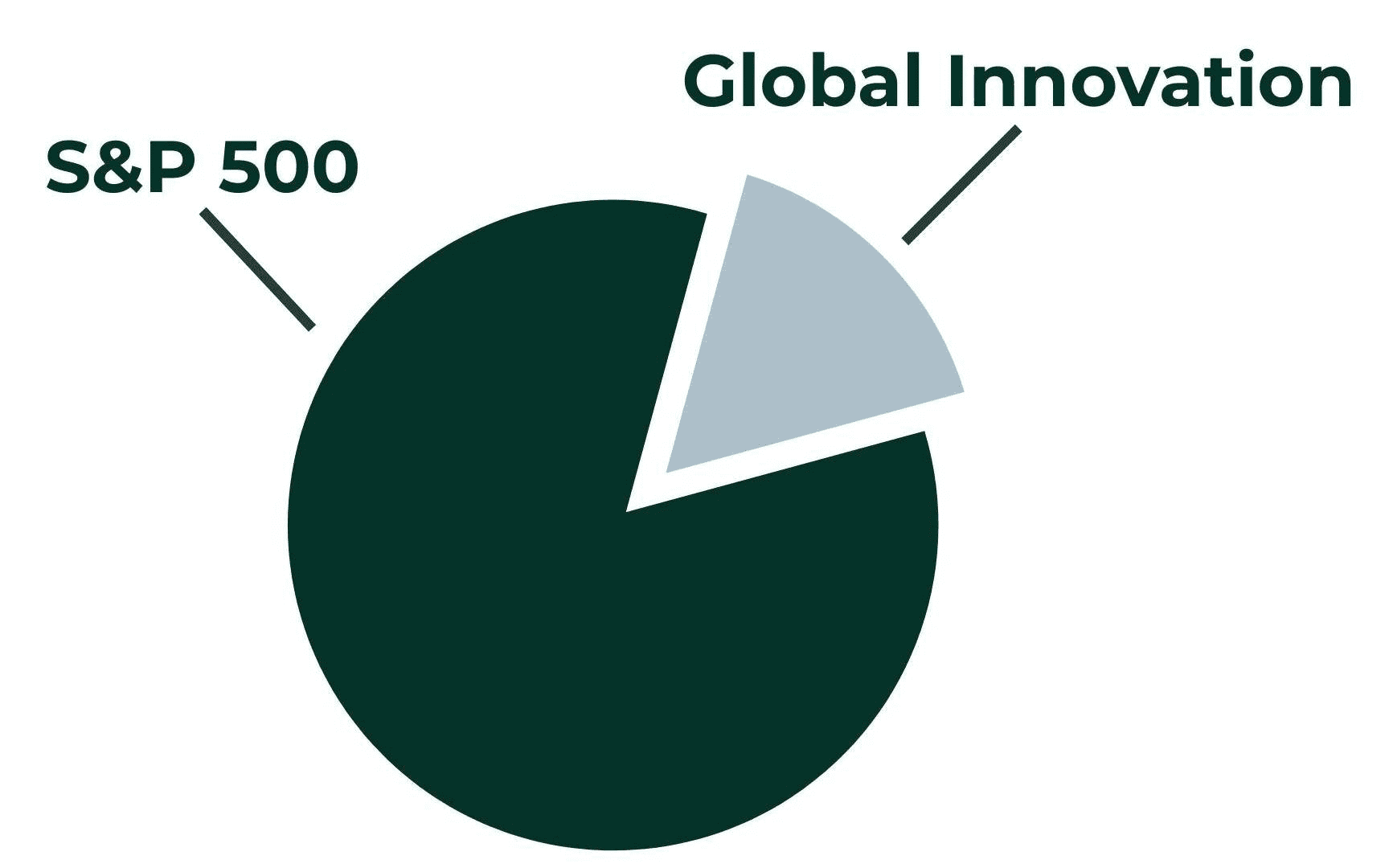
One response to those two assertions is the following: there are incredibly innovative and economically vital companies located outside the United States that you would not otherwise have access to unless you invested in International Companies (which all of our clients do).
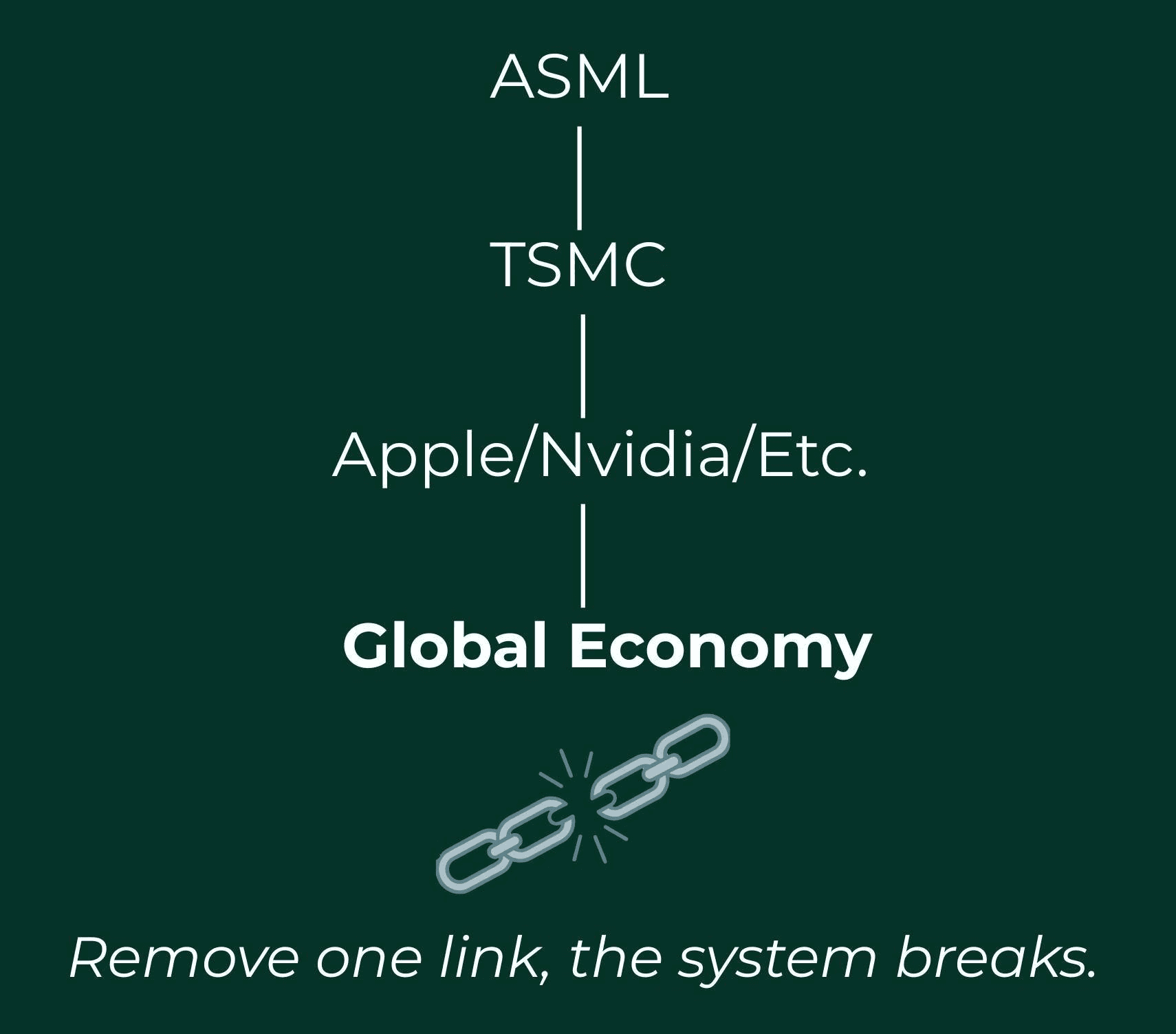
Two of these companies that fit the bill are ones you have probably never heard of but are deeply vital to the global economy: Taiwan Semiconductor Manufacturing Company (TSMC) and ASML, one of the world's leading manufacturers of chip making equipment (and one of the most crucial suppliers to TSMC). TSMC is based in Taiwan, and ASML is headquartered in the Netherlands. Neither of these companies are in the S&P 500 (because they are not domiciled in the United States).
• Over the last 10 years (January 2015 – January 2026):
• TSMC has averaged a 30.89% growth rate (source: Portfolio Visualizer)
• ASML has averaged a 27.44% growth rate (source: Portfolio Visualizer)
• For reference, TSMC is now worth $1.7 trillion and ASML is worth $560 billion.
How on earth have these companies grown at such an astonishing rate for a decade?
• It starts with the highly specialized manufacturing equipment that ASML builds, and they're essentially the only company in the world that builds these machines at scale.
Per Michael Cembalest in the earlier cited Eye on the Market Preview:
ASML extreme ultraviolet light (EUV) machinery is essential to production of artificial intelligence technology. In machines the size of large buses, ASML lasers fire 13.5 nanometer plasma pulses at the rate of thousands per second at microscopic pieces of ultra-pure tin. Tiny mirrors capture the refracted light and etch features smaller than 10 nanometers onto thinly sliced wafers of polysilicon. With a market cap over $500 billion, ASML is the largest technology company in Europe.
• Then, TSMC purchases that highly specialized equipment from ASML and builds the leading computer chips in the world.
Again, per Cembalest:
How unique is TSMC? Very. How reliant is the US on TSMC? Very, at least until the end of the decade. Eight of the 10 largest companies in the world by market cap depend in large part on TSMC supply (the only exceptions are TSMC itself and Saudi Aramco). For these companies, more than one third of their combined $2 trillion in revenue comes from hardware that uses TSMC products. The digital economy, automotive economy and industrial production economy rely on TSMC, and without it the world economy would sputter.
• Why are these chips from TSMC so in demand? Because US tech companies are spending on these chips at an astonishing rate (as they build out their AI capabilities.)
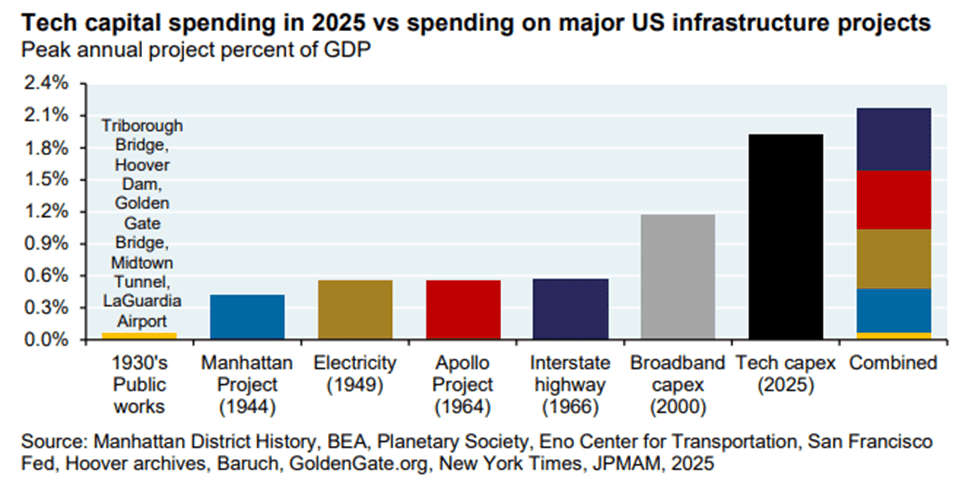
In 2025, spending by US tech companies (largely on these computer chips mentioned above) was almost as much as the 1930's Public Works projects under FDR, the Manhattan Project, electricity installation in 1949, the Apollo project, the Interstate Highway project in 1966, and broadband installation in the 2000's combined.
Thanks for reading,
Jack O'Connor, CFP®